

When discussing surgical innovation, attention is often focused on the technologies used during a procedure. Advances in imaging, energy devices, minimally invasive techniques and surgical instrumentation continue to transform the way healthcare professionals deliver patient care.
Yet there is growing recognition that surgical performance is influenced by more than the procedure itself.
The environment surrounding a procedure plays an important role in supporting visibility, workflow efficiency, environmental control, and overall theatre performance. As a result, conversations around operating theatre optimisation are increasingly extending beyond individual devices to encompass the broader surgical environment.
Looking Beyond the Procedure
Modern operating theatres are carefully designed environments where multiple technologies, processes and clinical teams work together to support surgical outcomes.
Every element within the theatre contributes to the overall surgical experience, including:
- Surgical equipment and instrumentation
- Visualisation technologies
- Workflow and room design
- Infection prevention measures
- Environmental controls
- Air quality management
While each of these elements serves a specific purpose, their collective impact can influence how efficiently and effectively a theatre functions throughout a procedure.
This broader perspective is helping to shape how healthcare organisations evaluate operating theatre environments and future technology investments.
The Importance of Environmental Control
Operating theatres are among the most controlled environments within a healthcare facility.
As procedures become increasingly sophisticated, maintaining optimal theatre conditions has become an important consideration for healthcare providers seeking to support consistency, efficiency, and clinical excellence.
Environmental control encompasses many factors, from maintaining clear visibility and effective workflow to ensuring technologies work together seamlessly within the theatre environment.
Increasingly, air quality management is becoming part of this conversation.
Air Quality as Part of the Surgical Environment
The discussion around operating theatre air quality is not simply about compliance or facility management. It is increasingly viewed as part of a comprehensive approach to creating well-managed surgical environments.
As healthcare technology evolves, attention is being given to solutions that help support cleaner, more controlled operating theatres.
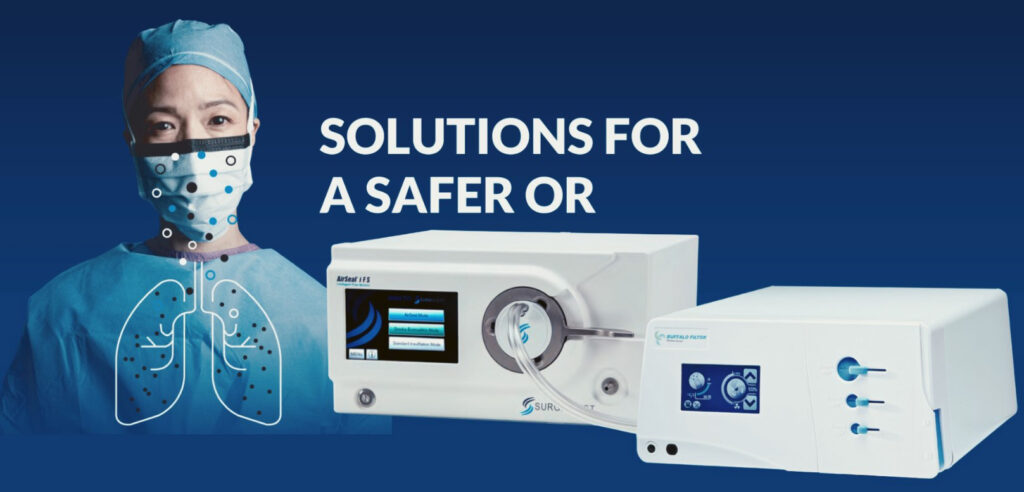
One area receiving growing attention is surgical smoke management.
Surgical smoke is generated during procedures that utilise energy-based surgical technologies and has long been considered a by-product of modern surgery. Today, however, there is increasing focus on how smoke management solutions can contribute to theatre visibility, environmental control, and overall operating theatre efficiency.
This has led many healthcare organisations globally to consider smoke evacuation as part of a broader operating theatre strategy rather than as a standalone technology.
The Evolution of Operating Theatre Technology
Healthcare innovation has always focused on improving the environments in which clinicians work.
From advanced arthroscopy systems and high-definition visualisation platforms to integrated operating theatres and robotic-assisted technologies, the objective remains the same: supporting better surgical environments through thoughtful innovation.
Smoke evacuation technology forms part of this evolution by helping to manage surgical plume and support cleaner operating theatre environments.
When viewed alongside other advances in surgical technology, it becomes clear that the future of theatre performance depends not only on the devices used during a procedure but also on the environment in which those devices operate.
Creating Better Surgical Environments
As healthcare continues to evolve, there is increasing recognition that operating theatre excellence is achieved through the combination of many factors working together.
Technology, workflow, visibility, environmental control, and air quality all contribute to the effectiveness of the surgical environment.
The most successful operating theatres are not defined by a single piece of equipment. They are shaped by integrated solutions that support clinicians, enhance efficiency, and contribute to a more controlled operating environment.
Looking Ahead
The conversation around surgical environments is continuing to evolve.
As healthcare providers seek new ways to optimise theatre performance, greater attention is being given to the factors that surround the procedure itself.
Because while surgical innovation remains essential, there is growing recognition that what surrounds the procedure matters too.
At Medhold, we partner with leading global healthcare technology companies, like CONMED, to provide advanced surgical solutions that support modern operating theatre environments across South Africa.